
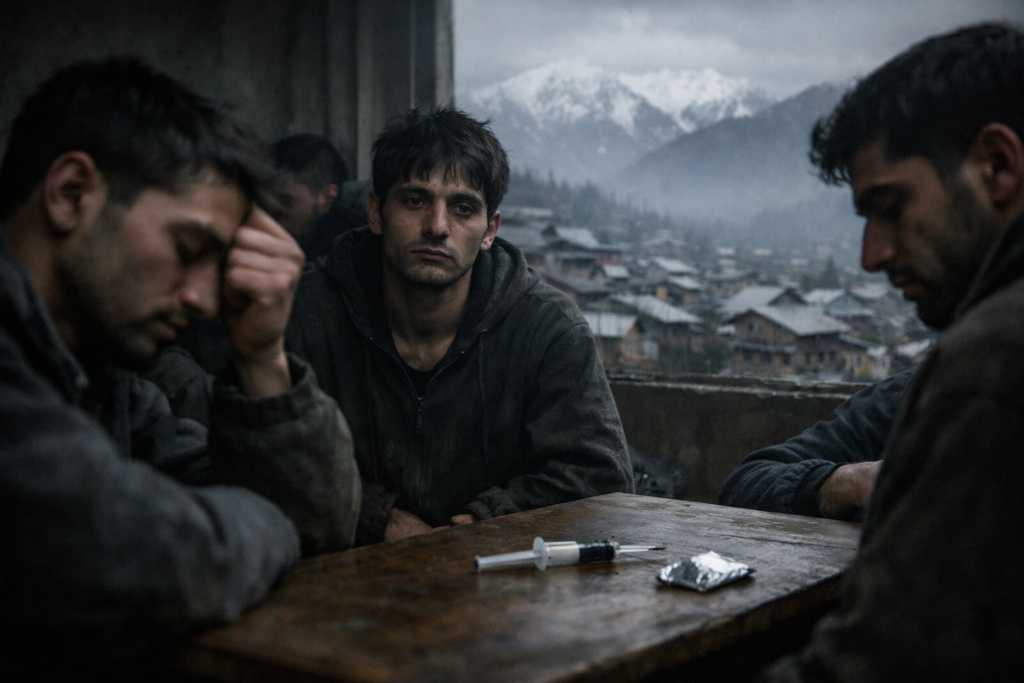
Srinagar: Drug addiction in Jammu and Kashmir has surged alarmingly, with official data showing that the number of substance users has nearly tripled over the past three years, driven largely by a sharp rise in heroin consumption among young people.
The disturbing trend was acknowledged by senior administration officials, who described the situation as a “serious social warning” and an emerging public health emergency. Authorities said heroin has rapidly replaced traditional narcotics, ensnaring students, unemployed youth and even school-going adolescents across urban and rural areas of the Valley.
Threefold increase despite governance claims
The spike in addiction has come despite repeated claims of improved governance and social stability in the region since 2019. Officials conceded that the scale and spread of drug abuse have expanded significantly over the last three to three-and-a-half years, raising concerns over the effectiveness of existing preventive measures.
While updated figures are yet to be formally released, earlier official assessments had already indicated that more than 13 lakh people in Jammu and Kashmir were consuming drugs, with nearly five lakh dependent on opioids, including heroin. Health officials say the numbers have since increased sharply.
Youth at the centre of the crisis
The most troubling aspect of the crisis is the growing involvement of youth. Administrators have warned that heroin use is no longer confined to marginalised sections but has penetrated educational institutions, coaching centres and residential neighbourhoods.
Medical professionals note that heroin’s high potency and low cost have made it especially dangerous, leading to faster dependency, severe withdrawal symptoms and a rising risk of overdose. De-addiction centres across Kashmir report a steady influx of first-time users, many in their late teens and early twenties.
Enforcement and rehabilitation efforts
In response, the administration has intensified anti-drug campaigns, involving police, health departments, educational institutions and religious leaders. Thousands of arrests have been made under the Narcotic Drugs and Psychotropic Substances Act in recent years, and awareness drives have been expanded at the community level.
Officials maintain that enforcement alone cannot solve the problem. Rehabilitation services, counselling, family support and social reintegration are being prioritised, though experts say existing facilities remain overstretched and insufficient to meet growing demand.
A looming social emergency
Public health experts warn that unchecked addiction threatens to destabilise families, increase crime and deepen mental health challenges in an already fragile social environment. Needle-based drug use has also raised concerns about the spread of infectious diseases and long-term neurological damage.
“This is not just a policing issue. It is a generational crisis that requires sustained social, economic and psychological intervention,” said a senior mental health professional associated with de-addiction programmes in the Valley.
As Kashmir grapples with the widening drug epidemic, officials and civil society groups agree that reversing the trend will require coordinated action, long-term investment in youth welfare and a shift from reactive enforcement to preventive care.
